
Services & Specialties
What I treat, and how
A closer look at my clinical focus areas and the treatment models behind them.
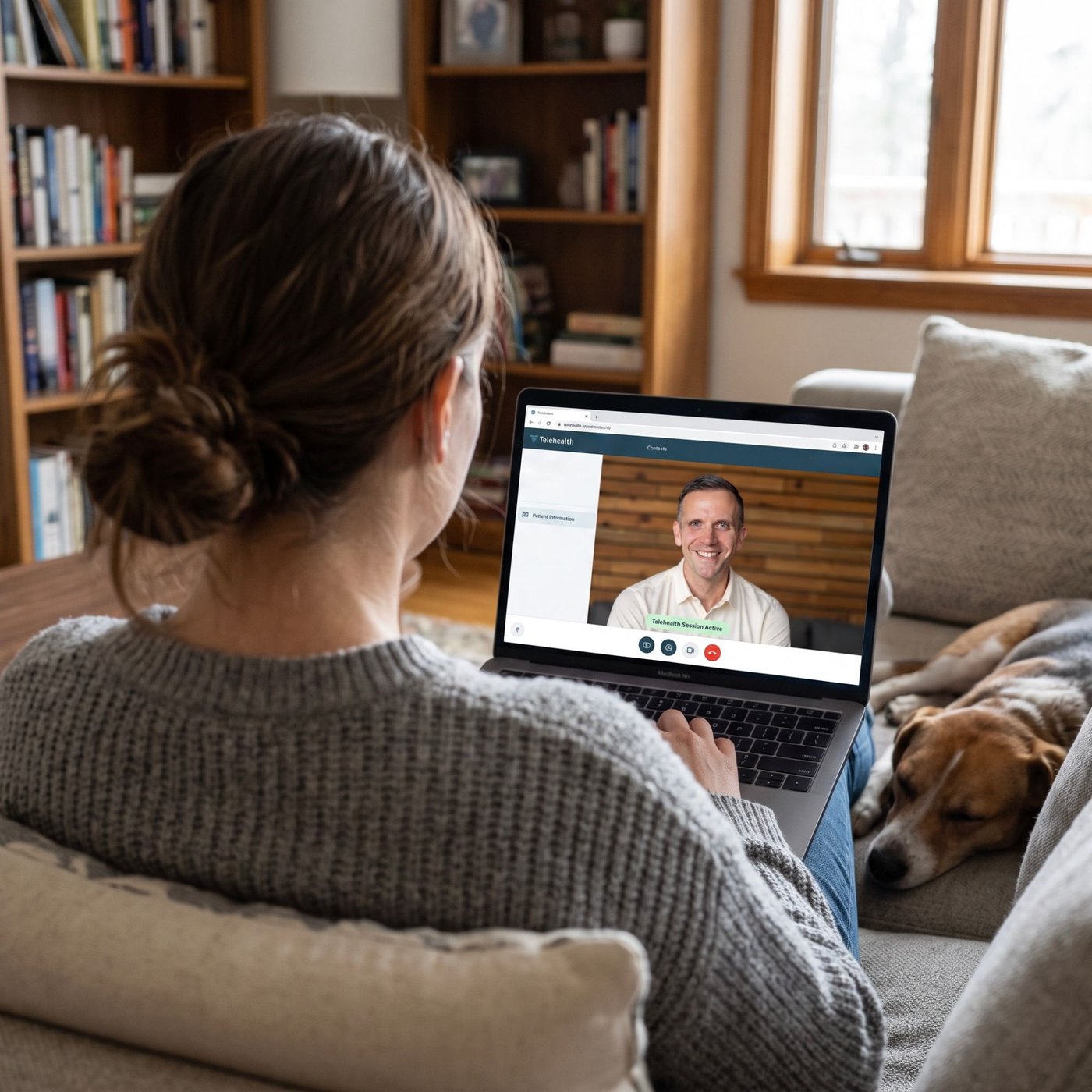
How Teletherapy Works
Real sessions, from wherever you're comfortable
Every appointment is requested, scheduled, and hosted through the secure SimplePractice client portal. Here's exactly what that looks like, from booking to logging in.
Request an Appointment
Use the client portal to request a time that fits your schedule — no phone tag required.
Get a Secure Video Link
You'll receive a confirmation with a private, HIPAA-compliant video link — no separate app or download needed.
Join From Home
At your session time, click the link from a computer, tablet, or phone and your session begins — right from your own space.
Manage Everything in One Place
Scheduling, secure messaging, paperwork, and billing all live in the same portal between sessions.
No Commute
Skip the drive entirely — your session starts the moment you click the link.
No Traffic
No accounting for drive time, parking, or unpredictable delays before an appointment.
No Waiting Room
Go straight from your day into session without sitting in a waiting area beforehand.
Your Own Space
Meet from wherever you feel most at ease — your couch, home office, or anywhere private.
What I Treat
Areas of Clinical Work
The conditions and concerns I work with regularly — from deep specialties to areas I address alongside them.
Panic Disorder
Recurrent panic attacks and the anticipatory anxiety that builds around them, treated through interoceptive and situational exposure.
Generalized Anxiety Disorder
Persistent worry and physical tension, addressed through CBT and ACT to build a different relationship with uncertainty.
Phobias
Specific fears of situations, objects, or activities, treated with structured, graded exposure.
Social Anxiety
Fear of judgment or embarrassment in social or performance situations, addressed through exposure and cognitive work.
Health Anxiety
Persistent worry about physical symptoms or illness, addressed through CBT and exposure-based strategies.
OCD-Spectrum Disorders
Obsessions and compulsions treated with Exposure and Response Prevention — the gold-standard, evidence-based approach.
Paruresis (Shy Bladder)
A developing niche subspecialty: ERP-adapted treatment for shy bladder syndrome, delivered discreetly over telehealth.
Assertiveness Skills
Building the skills and confidence to communicate needs clearly and hold boundaries in relationships and work.
Depression
Behavioral activation and cognitive strategies to rebuild engagement and mood.
Chronic Illness
Support coping with the emotional impact of an ongoing medical condition.
Skin Picking
Support for skin picking (excoriation) and related body-focused repetitive behaviors.
Retirement Adjustment
Navigating the identity and lifestyle shifts that come with retirement.
Caregiver Stress
Support for the emotional toll of caring for an aging parent, spouse, or family member.
Grief & Loss
Processing grief and loss, including bereavement and other significant life losses.
Professional Stress
Managing burnout, workplace conflict, and career-related stress.
Sleep Difficulties
Addressing insomnia and other sleep difficulties affecting daily functioning.
If your area of need is not listed, just call (239) 350-3636 and see if Dr. Rood can help.
Modalities & Orientation
The frameworks behind the work
CBT
Cognitive Behavioral Therapy — identifying and shifting the thought and behavior patterns that maintain distress.
ACT
Acceptance and Commitment Therapy — building psychological flexibility and values-driven action, even alongside discomfort.
ERP
Exposure and Response Prevention — including active, in-session exposure work adapted specifically for telehealth.
Client-Centered
A collaborative, respectful therapeutic relationship as the foundation for every technique layered on top.
Measurement-Based Care
Seeing your progress, not just feeling it
Throughout treatment, I use standardized, validated assessments to track symptom change objectively over time. Results are reviewed together, graphically, so decisions about your care are informed by data as well as conversation.
Why track symptoms?
- Confirms what's working — and flags what isn't, early
- Keeps treatment goals concrete and collaborative
- Gives you a visual record of how far you've come
Ready to talk about what you're working through?
For new inquiries, call (239) 350-3636 or complete the contact form.
Openings for new clients are limited — reach out to check current availability.